moisture
Polyester, cotton, spandex, blends — here's what performance golf polo fabrics actually do and why the blend matters.
You've probably seen the term moisture-wicking on every golf polo tag for the last decade. It's become one of those marketing terms that gets thrown around so much it starts to lose meaning. But the science behind performance golf fabrics is real, and understanding how different materials actually work will help you pick shirts that genuinely keep you comfortable through eighteen holes instead of just promising to.
Moisture-wicking isn't magic — it's physics. Synthetic fibers like polyester are hydrophobic, meaning they don't absorb water. When you sweat, the moisture sits on the surface of the fiber instead of soaking in. The fabric is engineered with capillary channels — tiny pathways between the fibers — that pull moisture from the inside surface of the shirt (next to your skin) to the outside surface, where it can evaporate. The result is that sweat moves away from your body instead of pooling against it. Cotton does the opposite — it absorbs moisture, holds onto it, and gets progressively heavier and clingier as you sweat.
Polyester is the backbone of modern golf apparel for good reason. It's lightweight, durable, resistant to shrinking and wrinkling, and it dries dramatically faster than cotton. High-quality polyester can be engineered with specific fiber cross-sections that maximize moisture transport. It also holds dye exceptionally well, which means colors stay vibrant wash after wash instead of fading into that sad, washed-out look. The knock on polyester used to be that it felt plasticky and cheap, but modern microfiber polyester is soft, breathable, and genuinely comfortable against the skin.
Cotton feels great when it's dry. It's soft, breathable in low-activity situations, and has a natural, casual feel that some golfers prefer. The problem is that cotton absorbs up to 27 times its weight in water. On a warm day, a cotton polo becomes a wet, heavy, uncomfortable distraction by the back nine. It also takes significantly longer to dry, which means you're stuck feeling damp. Cotton has its place in casual golf settings and cool weather, but for performance in any kind of heat or humidity, it can't compete with synthetics.
Spandex (also called elastane) is what gives a polo its stretch and recovery. Even a small percentage of spandex in the fabric blend — typically between 5% and 15% — transforms how a shirt moves with your body. Four-way stretch means the fabric gives in every direction, so your polo moves with your swing instead of against it. Without spandex, polyester on its own can feel stiff and restrictive during dynamic movements. The spandex snaps the fabric back to its original shape, which means the shirt maintains its fit and silhouette over time instead of bagging out.
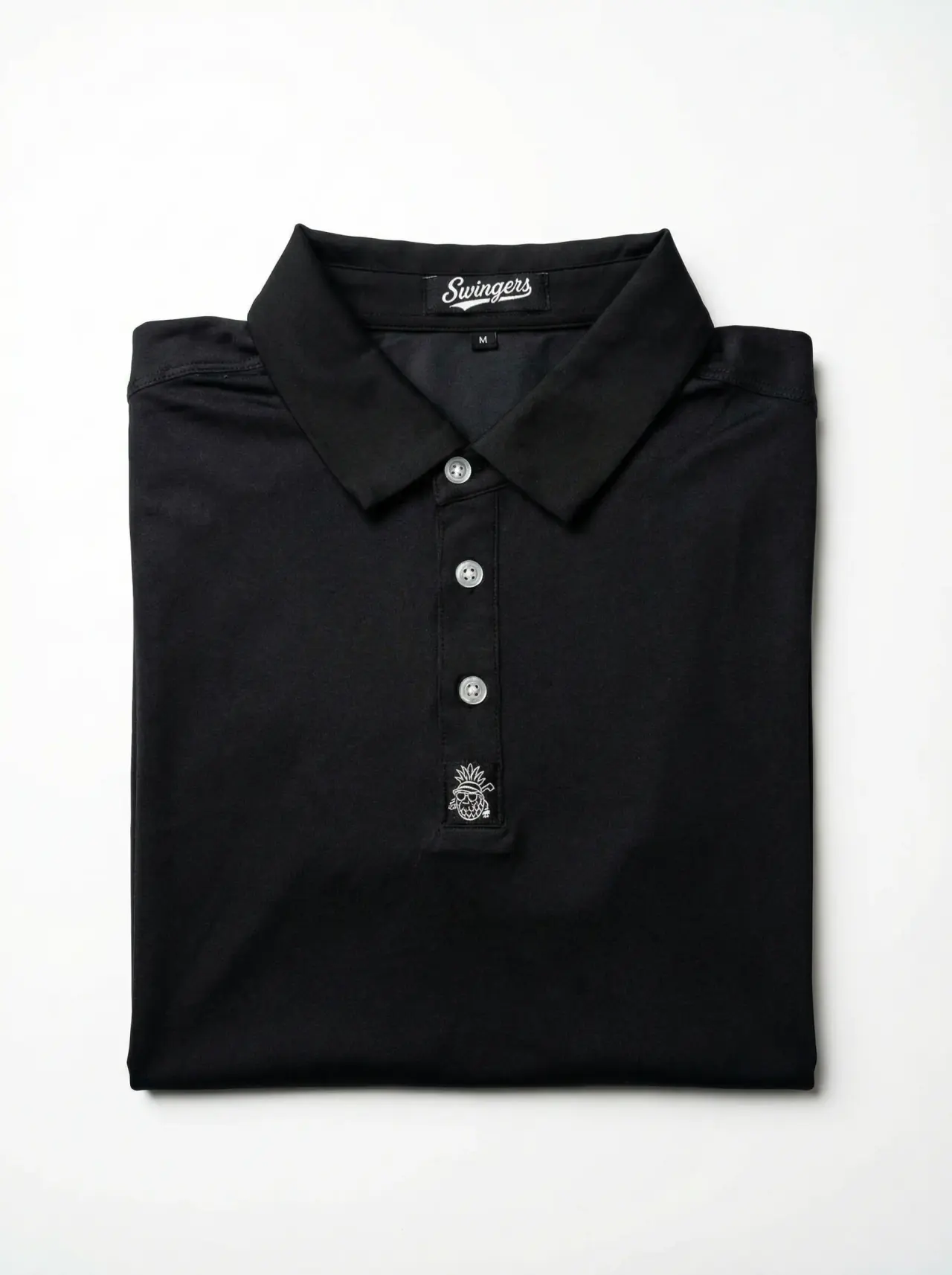
The sweet spot for golf polos is a polyester-dominant blend with enough spandex for meaningful stretch. Too much polyester and the shirt feels rigid. Too much spandex and it becomes clingy and loses its structure. The Swingers Club polos use an 88% polyester, 12% spandex blend, which is right in that ideal range. You get polyester's moisture-wicking and quick-dry properties combined with enough spandex for genuine four-way stretch through your full range of motion. That blend hits fifty-eight dollars, which tells you the fabric quality doesn't have to come at a premium price.
Next time you're shopping for a golf polo, flip it inside out and read the fabric composition. If it's 100% cotton, expect comfort at rest but diminishing returns once you start sweating. If it's 100% polyester with no stretch component, it'll wick moisture but might restrict your swing. Look for a polyester-spandex blend in the range of 85-92% polyester and 8-15% spandex. A well-constructed performance polo should list its fabric blend and care instructions clearly. If a brand is vague about what's in their product, that's usually a sign to keep looking.
More from the journal
Apr 29, 2026
The dress code separates you from the field. Here's how to pack, what to wear each day, and what to skip for a member-guest weekend.
Apr 8, 2026
The Pacific Northwest is home to some of the most stunning golf in the country. Here are the Washington state courses every golfer needs to play.